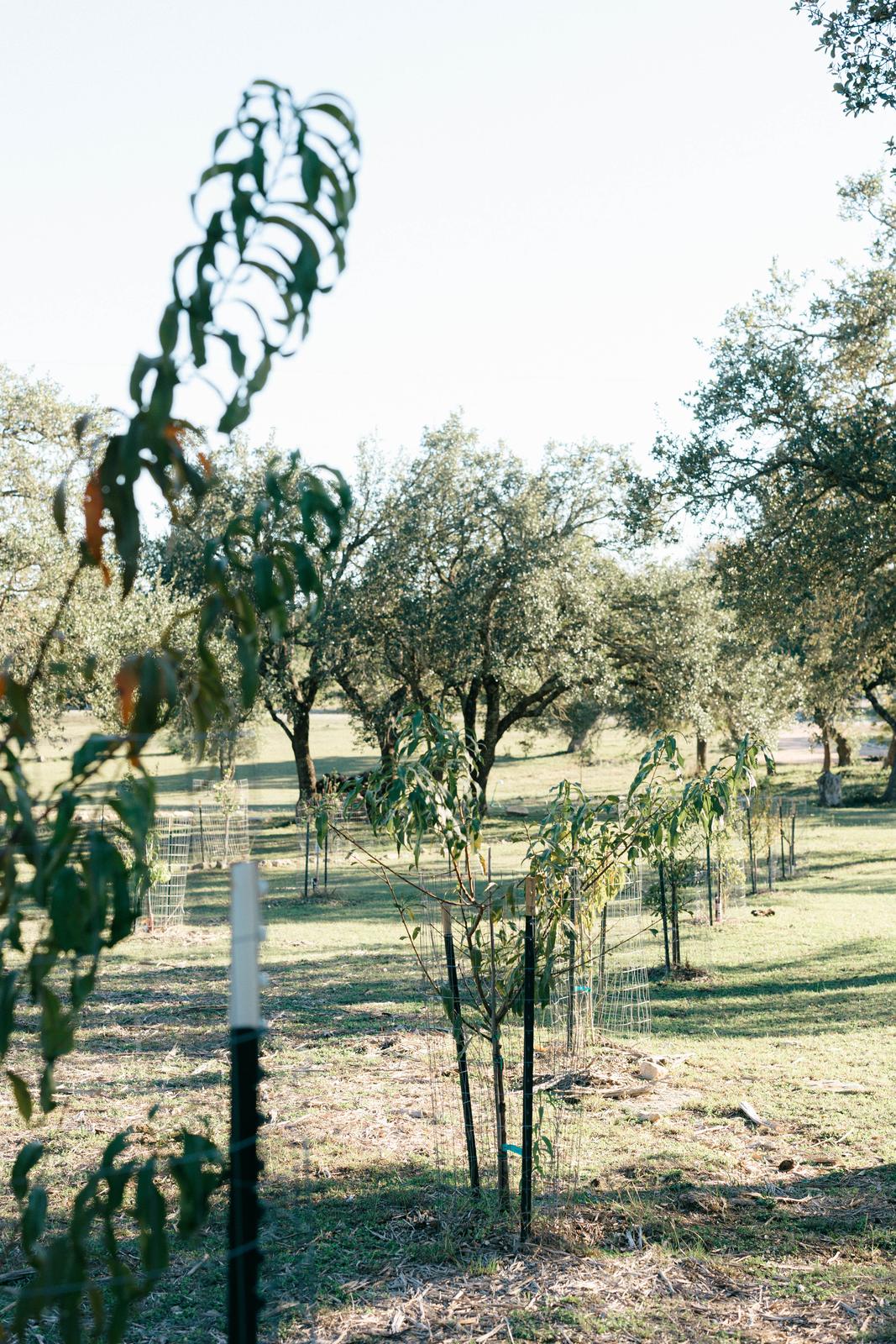
We're finding out. We have three apple varieties in the orchard: Ein Shemer, Fuji and Gala. The Fuji and Gala trees went in during spring 2025 as young 5-gallon trees. Nobody has a harvest to report yet. What we can share is what the research says, and it's a pretty interesting mix. Ein Shemer is a low-chill apple, Fuji and Gala need more winter cold, and our area lands closer to the Fuji and Gala end.
Chill hours come first
Apple trees need a certain amount of winter cold, counted in chill hours, before they bloom and set fruit properly. Texas A&M's guide to apples in Texas says the variety you plant should have a chill requirement within about 150 hours of your area's average winter chilling.
Miss in either direction and you pay for it. Too little cold and bloom comes in weak and drawn out, and several low-chill winters in a row can stress a tree badly enough to kill it. Too low a requirement and the tree can bloom early, right into a late freeze.
How many chill hours do we get?
We don't measure chill on our own property, so here's the closest sourced number we have. The Texas A&M TexasET weather station at Dripping Springs logged 605 chill hours from October 1, 2023 through March 31, 2024. That count uses the 32 to 45 model, meaning hours spent between 32°F and 45°F. It's one winter at one station, published by the Travis County AgriLife Extension office. The same page has A&M's chill map, which puts neighboring Travis County in the roughly 700-hour zone, with a range of 550 to 850.
Winters here swing a lot from year to year. Texas A&M AgriLife reported chill hours well below average across the state for the 2025 to 2026 winter. So treat 605 as a ballpark for the area, not a promise for any one yard.
Ein Shemer
Ein Shemer is a low-chill apple that came to the U.S. from Israel. UF/IFAS Extension groups it with Anna and Dorsett Golden as apples that do well in warm Florida winters, with a cold requirement of about 300 to 400 hours below 45°F. Heads up, that's a slightly different way of counting than the 32 to 45 model above, so the numbers aren't a perfect match.
On paper, our area gets more chill than Ein Shemer needs. That's the good news. The thing to watch is early bloom running into a late freeze. We wrote about our Ein Shemer trees back in March in Ein Shemer apples in the Hill Country.
Fuji
A&M lists Fuji at about 600 chill hours and calls it heat resistant, which is nice to read in Texas. It also says Fuji is susceptible to bitter rot and red mites and needs some detailed pruning every year. Fuji is on the Travis County fruit variety list too, at 600. Travis County is our neighbor, not our county, so we take that as a good sign and not a guarantee.
Gala
Gala is also listed at about 600 hours in both guides. A&M is pretty upfront that Texas growers struggle to get consistently large Gala apples, although wetter seasons help. Gala shows some self-fertile tendencies, but A&M still recommends pollinating it with another variety of similar chill. One catch: Gala, Imperial Gala and Royal Gala won't pollinate each other.
Pollination is the other half
Apples need a partner, and A&M recommends planting more than one variety with overlapping bloom. Similar chill requirements are how you get there. On paper, Fuji and Gala should line up since both are listed around 600 hours. Ein Shemer needs a lot less chill, so it may bloom ahead of the other two. Whether any of them overlap is one of the things we're watching. Our bees will be out there either way, but bees can't fix a bloom timing mismatch.
What we're keeping track of
A nursery tag and a planting date are a start. Over the next few seasons we're watching for:
- When each tree first blooms, and what else is blooming at the same time
- Whether fruit sets, and whether any of it makes it to harvest
- Late freezes that hit during bloom
- How each variety handles a Hill Country summer
When we have real observations, they'll go here in the journal. Until then you won't see harvest dates or yields from us, because we don't have any yet.
No apples on the order form yet
The orchard is still young, so there's no fruit to order. For the bigger picture of what we planted and why, read planting 40+ trees in the Hill Country. If you're planting your own trees in Hays County, the Hays County AgriLife Extension office is a good place to ask about your specific site.
In the meantime, eggs, sourdough and firewood are on the order form.