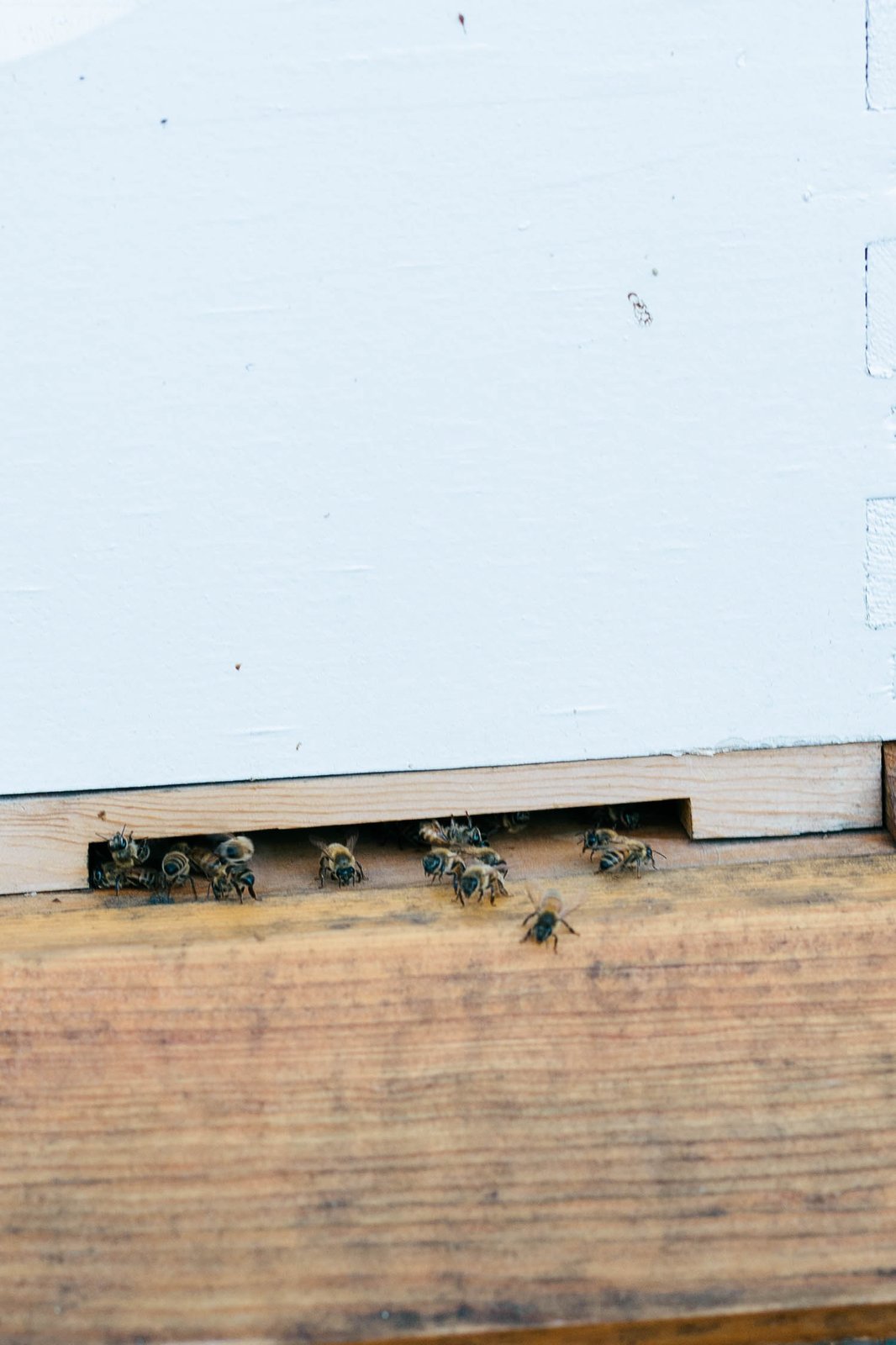
Our bees had a rough late summer. One colony turned aggressive, and neither hive could really grow past about 7 frames. The good news first, though. We're down to one hive for the winter, and that one hive has two deep boxes filled up. So we should get some nice honey in the spring.
This is the first post in a little fall series. I'm adding hives in the spring, and between now and then I'm going to do some research and share what I learn as we get ready.
What happened this summer
The colony that turned aggressive was one of our original Buckfast colonies. In late summer I found queen cells in that hive. The colony was replacing its own queen. Then came a stretch with no eggs at all. A few weeks later there were eggs again, so the new queen was up and laying.
After that, the bees slowly got more and more aggressive. Not all at once. Just a little worse every time I opened the hive. So I had to sacrifice that queen. Honestly, they weren't really growing anyway.
We're down to one hive for the winter.
Why a colony replaces its queen
This is general beekeeping info, not something I've confirmed about my own hive.
When a queen starts to fail, the workers raise a new one to replace her. Beekeepers call that supersedure. The Mid-Atlantic Apiculture Research and Extension Consortium explains that supersedure cells are usually built on the face of the comb. They also note that a new queen mates about a week after she emerges, and she starts laying about 48 hours after mating. So a gap with no eggs, followed by eggs again, is pretty much how it's supposed to go.
Why a new queen can change a colony's temper
Here's the part I didn't fully appreciate. A new queen flies out and mates with somewhere around 7 to 15 drones from whatever colonies are nearby. MAAREC says her genetics and the genetics of those drones both shape the colony's temperament. As her daughters replace the old queen's workers, the whole personality of the hive can shift. So a colony that started out Buckfast doesn't stay purely Buckfast once it raises its own queen.
In Texas, that matters. The Texas Apiary Inspection Service says Africanized honey bees had been detected in 163 of the state's 254 counties by 2006. I don't know what my new queen mated with, and I'm not saying these bees were Africanized. But it's the reason the Texas Apiary Inspection Service's best management practices say to requeen any overly defensive colony with a European honey bee queen.
Why combining weak colonies makes sense (most of the time)
There's an old saying in beekeeping that NC State Extension repeats: "take your winter losses in the fall." The idea is that two weak colonies are less likely to make it through winter than one stronger one. So you combine them in the fall, keep the queen from the stronger colony, and make splits again in the spring.
The Texas Apiary Inspection Service adds a caution. Don't combine weak or collapsing colonies with healthy ones, because you can spread pests and diseases. So it's a judgment call, not an automatic move.
The 7-frame question
Neither hive could get past about 7 frames this year. I don't have a good answer for why yet, and I'm not going to guess on here. That's one of the first things I want to dig into this fall.
What's next: more hives in the spring
I'm adding hives in the spring, and I'll probably go with local bees. One reason beekeepers change a colony's genetics, according to the UC Davis California Master Beekeeper Program, is to get bees that are better adapted to the local environment. More on that as I do the research. We started with Buckfast bees, and you can read why we chose Buckfast back then.
Over the next few posts I want to cover:
- Why a hive stalls around 7 frames
- What to look for in local bees, and where to get them
- How to get a colony through a Central Texas winter
About that honey
Honey is coming soon. I'll add a honey super for the spring flow, and we'll get honey in the spring. It's not for sale yet, and I'm not putting a date or an amount on it. When it's ready, we'll say so here and on the order form.
In the meantime, eggs, sourdough and firewood are on the order form.