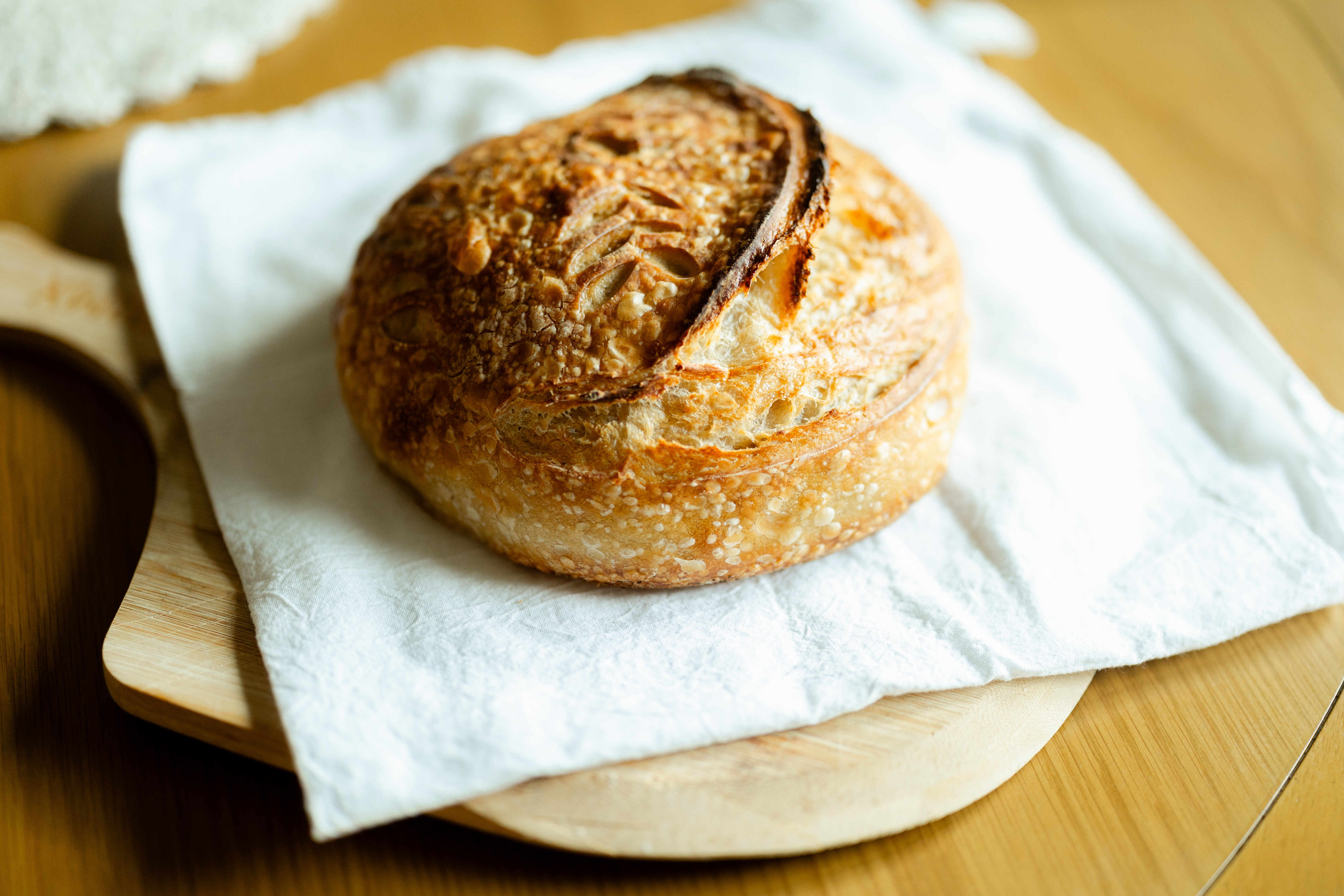
Short version: let the loaf cool all the way, give it some air the first day, bag it after that, skip the fridge, and freeze whatever you won't get to in the next couple of days. That's really it. The rest of this is how we'd handle a loaf from our kitchen.
A crusty loaf plays by different rules
Our sourdough ferments for 18 hours or more and bakes in a cast iron Dutch oven, so it comes out with a thick, crackly crust. That crust does a lot of work. It holds moisture in the crumb. It's also the first thing you lose if you seal a warm loaf in plastic, because it goes soft and a little leathery.
Soft sandwich bread is a different animal and does fine in a bag from the start. A crusty round wants air for the first day and protection after that. King Arthur Baking's storage guide walks through all of this in detail if you want the long version.
The first day
We bake to order, so sometimes your loaf is still warm at pickup. Let it cool completely before you slice it or wrap it. After that:
- Leave it on a cutting board under a big bowl or cake cover, something with room for air to move. King Arthur says that keeps the inside moist and the crust crisp for about a day.
- Cut from the middle instead of the end. Take your slices from the center, then push the two halves back together so the crust covers the cut faces. That's a King Arthur trick and it works because the crust keeps the moisture in.
After about 24 hours, bag it
Once it's a day old, the loaf needs more protection or it starts going hard. King Arthur's testing found paper bags don't help much and actually speed up staling. A cloth bag or kitchen towel does a little better. A plastic bread bag holds moisture best, at the cost of a softer crust.
Our sourdough page says the bread is best within 2 to 3 days at room temperature. After that, the toaster is your friend.
Skip the fridge
It feels like the safe move, but the refrigerator dries bread out fast. King Arthur recommends freezing rather than refrigerating, and we'd agree.
Freeze it in portions you'll actually use
This is where most of the waste goes away. Before the loaf turns into a rescue project, figure out what you'll eat in the next day or two and freeze the rest.
- Slice it first. A frozen whole loaf is a pain to cut.
- Bag the slices airtight in portions of one or two. A piece of parchment between portions keeps them from freezing into one brick.
- Pull out what you need and toast it straight from frozen.
If it's mostly breakfast toast at your house, freeze small portions. If bread shows up next to dinner, freeze bigger chunks. Size it to how your house eats.
Order the right amount next time
A loaf for two people goes a lot further than a loaf for a family of five. Pay attention to how much you actually use between pickups and order around that. For ways to use up the rest, here's one loaf, a few good meals. And if you've ever wondered why we take so long with it, that's in the case for an 18-hour ferment.
Ready for another loaf? Check out our sourdough page for how it works, then send a request on the order form. We'll confirm the bake and your pickup time.