If you're picking up farm fresh eggs in Dripping Springs from us, storage is simple. Our eggs are never washed, so they're fine on the counter. Once you wash them, they go in the fridge, and they'll last even longer there. The main thing is to pick a spot and keep them there. Here's the why, plus a few easy habits that keep eggs good until the last one.
Why unwashed eggs are fine on the counter
A hen coats every egg with a thin natural layer called the bloom (you'll also see it called the cuticle). It helps keep bacteria and moisture out of the shell. The University of Wyoming Extension says unwashed eggs with the bloom intact can sit on the counter, and that washed eggs must be refrigerated. Ask Extension says the same thing: unwashed farm eggs are safe unrefrigerated, and once an egg is washed it should go in the fridge at 40°F or lower.
To be fair, the USDA takes a more cautious line. The USDA Food Safety and Inspection Service recommends refrigerating eggs, and grocery store eggs are washed and sanitized at the plant, which is why those cartons say "Keep Refrigerated." If you'd rather put everything in the fridge, that's a good call too. Your eggs will keep even longer there.
How long can unwashed eggs sit on the counter?
Extension sources put a number on it, and they don't all land in the same place. The University of Wyoming Extension says unwashed eggs with the bloom still intact can sit on the counter for two weeks without going bad. Ask Extension (Michigan State University Extension) says unwashed farm fresh eggs are safe unrefrigerated for up to 3 weeks after harvest. Both say washed eggs belong in the fridge. Ask Extension also notes that eggs last longer when refrigerated, up to 45 days. So if you want more time, the fridge is the safer bet. These are what the sources say, not a promise about any particular carton.
Once eggs are cold, keep them cold
This is the part that matters most. According to the USDA, a cold egg left out at room temperature can sweat, and that moisture helps bacteria move into the egg. USDA also says refrigerated eggs shouldn't sit out more than 2 hours. So if your eggs go in the fridge, leave them in the fridge. Don't bounce them back and forth.
Wash eggs right before you use them
You might see a little natural residue on our shells. That's normal for an egg that hasn't been washed. The USDA doesn't recommend washing eggs at home, because wash water can get pulled into the egg through the pores in the shell. If one needs it, rinse it right before you crack it. And if you do wash a batch ahead of time, those go in the fridge.
Where to keep them in the fridge
Keep eggs in their carton in the coldest part of the fridge, not in the door, with the fridge at 40°F or below. That's straight from the USDA. The door warms up every time someone opens it.
How to tell if an egg is still good
The USDA explains the float test. An egg floats when the air pocket inside has gotten bigger with age. That means lower quality, but it may still be perfectly safe. Crack it into a bowl first and check it. A spoiled egg has an unpleasant smell you won't miss. Skip any egg that's cracked, since bacteria can get in through the crack.
How we handle eggs at our Dripping Springs farm
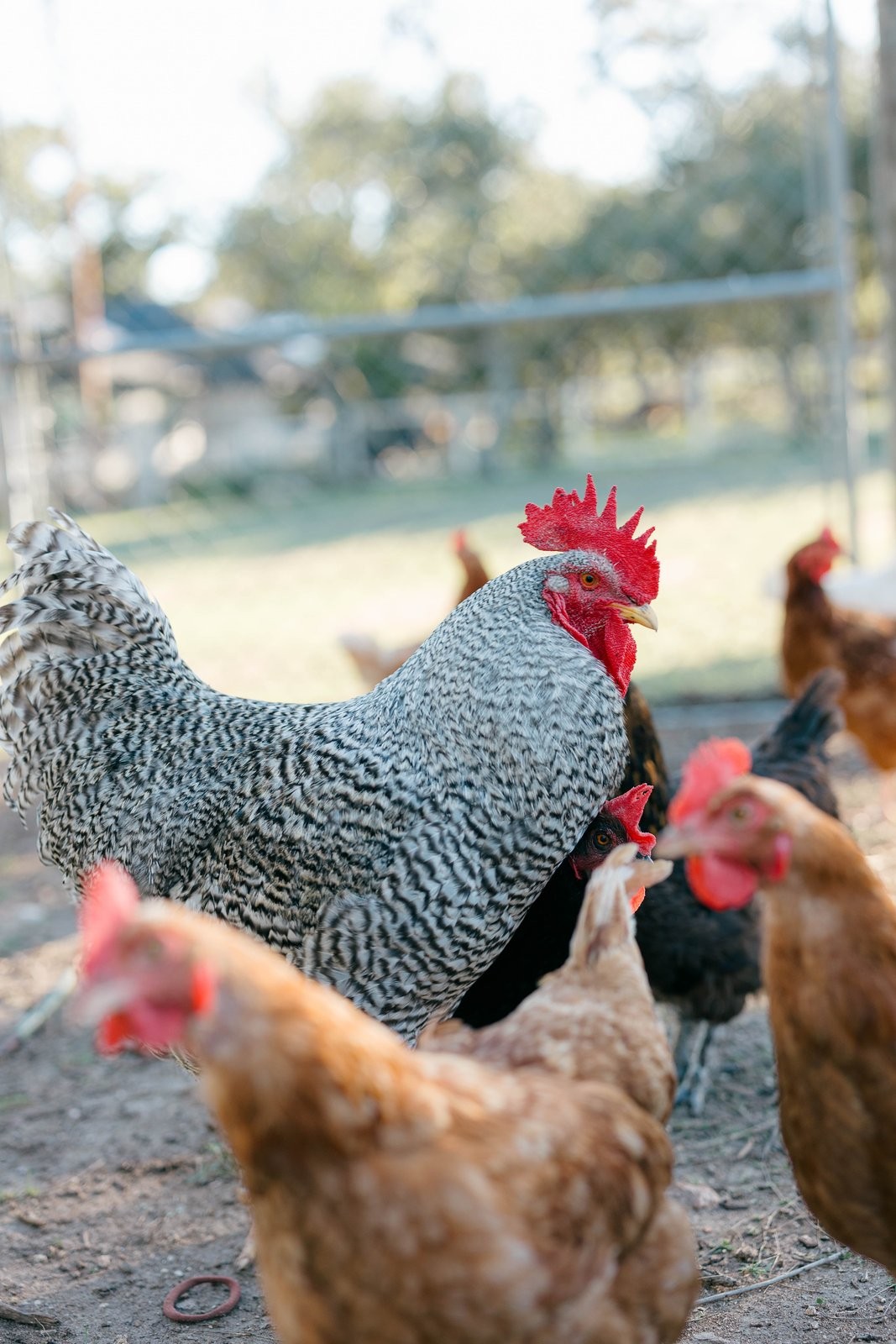
Here's what we actually do on our end. Our hens live outside on our 5 acres in Dripping Springs. We collect eggs every day and never wash them, so the bloom stays on. When you pick up, your eggs were laid within the last 24 to 48 hours.
Pickup is self-serve in our garage, and you can pay by Zelle, Venmo or cash. If you've never done it, our first pickup guide walks through it step by step.
How many eggs to order
Not sure whether a half dozen or a dozen fits your week? The egg planner in our Dripping Springs eggs post does the math for you. Eggs are $4 for a half dozen and $7 for a dozen. You can read more about the flock on our fresh eggs page, or just put in a request on the order form.